
News + Blog
Capturing the Olympic Spirit Through Posters
Explore the artistic evolution of Olympic posters and the role of ARS artists in shaping their legacy.
REQUEST TO LICENSE ARTWORK | JOIN OUR MAILING LIST TO LEARN MORE ABOUT LICENSING ARTWORK
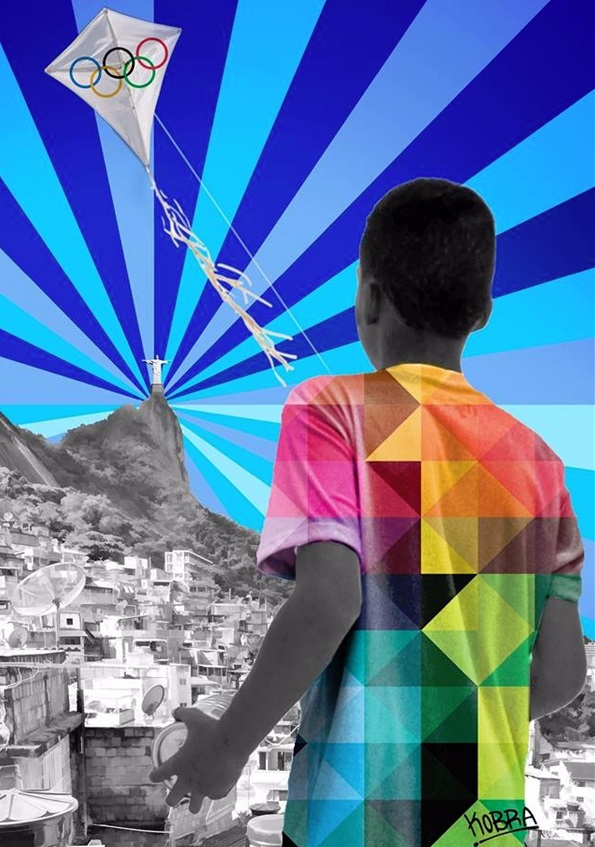
Brazilian graffiti artist Kobra’s poster design for the 2016 Rio Olympics © 2024 Artists Rights Society (ARS), New York / AUTVIS, Sao Paulo
The Olympics unite the world through sport, but it’s often art that tells the story.
Since the early 20th century, art – especially posters – has functioned both as a dynamic promotional tool and as a compelling reflection of the cultural zeitgeist of each era. This dual role makes them ideal for events like the Olympics, where it’s crucial to capture and convey the energy and spirit of the moment. Olympic posters transform the event from mere competition into a global celebration of culture and creativity, often becoming iconic symbols that resonate far beyond the Games.
ARS artists have long been instrumental in shaping the visual identity of the Olympics, and this year is no exception. While our members have been commissioned to produce art for the Games across various mediums, their posters offer a particularly unique and focused lens through which we can view the evolution of both the Olympic Games and graphic design as a discipline.
With the 2024 Olympics in full swing, it’s a great time to get a head start on your creative playbook and take inspiration from some of the iconic Olympic posters made by ARS artists. Let the spirit of the Games spark fresh and innovative ways to incorporate sports-related art into your future projects. Then reach out to us at info@arsny.com to explore how art licensing with Artists Rights Society can help your brand go for the gold!
Historic Highlights: ARS Artists’ Key Olympic Art Contributions
The Munich 1972 and Los Angeles 1984 Olympics are notable for the exceptional artistic contributions of ARS members, each marking a significant moment in Olympic art history.
The Munich 1972 Olympics revolutionized the Games’ artistic engagement through an unprecedented series of original posters created by a diverse group of international artists. Over 20 ARS members were commissioned to contribute, including Josef Albers, Jacob Lawrence, Pablo Picasso, and Tom Wesselmann, resulting in a modernist approach that broke away from traditional Olympic imagery. This diversity helped shape a narrative of Germany as a cosmopolitan and culturally progressive nation, aiming to distance itself from the lingering associations with the ideology of the Nazi regime.
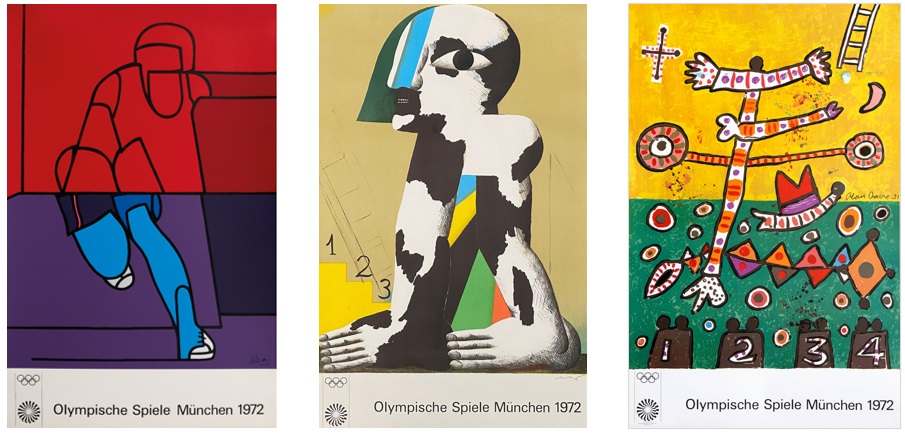
1972 Munich Olympic Posters (Left to Right): Valerio Adami © 2024 Artists Rights Society (ARS), New York / ADAGP, Paris; Horst Antes © 2024 Artists Rights Society (ARS), New York / VG Bild-Kunst, Bonn; Alan Davie © 2024 Artists Rights Society (ARS), New York / DACS, London
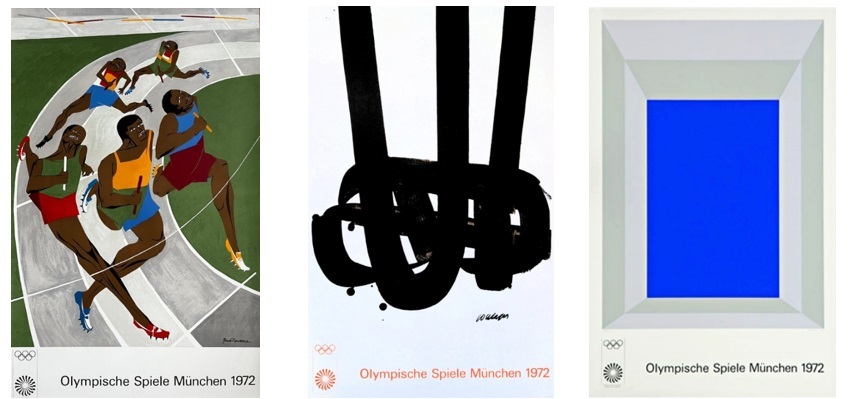
1972 Munich Olympic Posters (Left to Right): Jacob Lawrence © 2024 The Jacob and Gwendolyn Knight Lawrence Foundation, Seattle / Artists Rights Society (ARS), New York; Pierre Soulages © 2024 Artists Rights Society (ARS), New York / ADAGP, Paris; Josef Albers © The Josef and Anni Albers Foundation / Artists Rights Society (ARS), New York, 2024
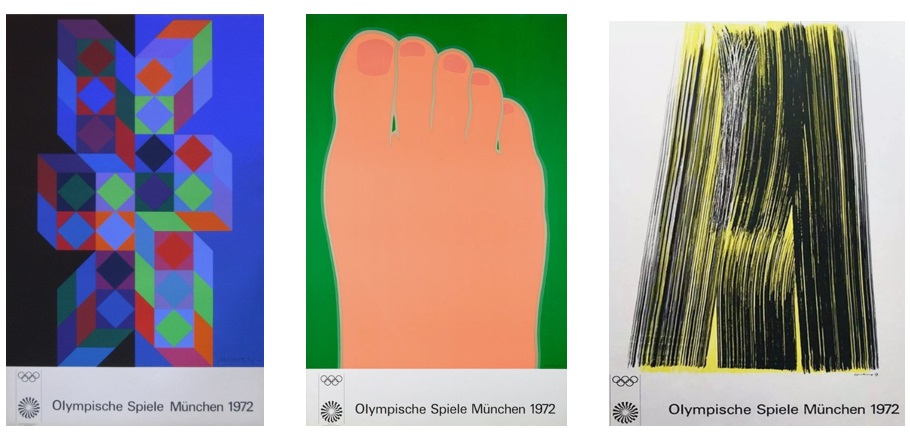
1972 Munich Olympic Posters (Left to Right): Victor Vasarely © 2024 Artists Rights Society (ARS), New York / ADAGP, Paris; Tom Wesselmann © 2024 Estate of Tom Wesselmann / Artists Rights Society (ARS), NY; Hans Hartung © 2024 Hans Hartung / Artists Rights Society (ARS), New York / ADAGP, Paris
Moving to the 1984 Los Angeles Olympics, the spotlight shifts to a singular, influential work by Robert Rauschenberg, a key figure in the Pop Art and Combines movements. His design incorporates that year’s Olympic emblem – a stylized star icon in red, white and blue – into a vibrant collage that captures the dynamic and eclectic spirit of the era. Upon closer inspection, you can see a blend of photomontage elements that include images of sporting activities intertwined with seemingly random but era-specific details, including a space shuttle and a stack of calculators.
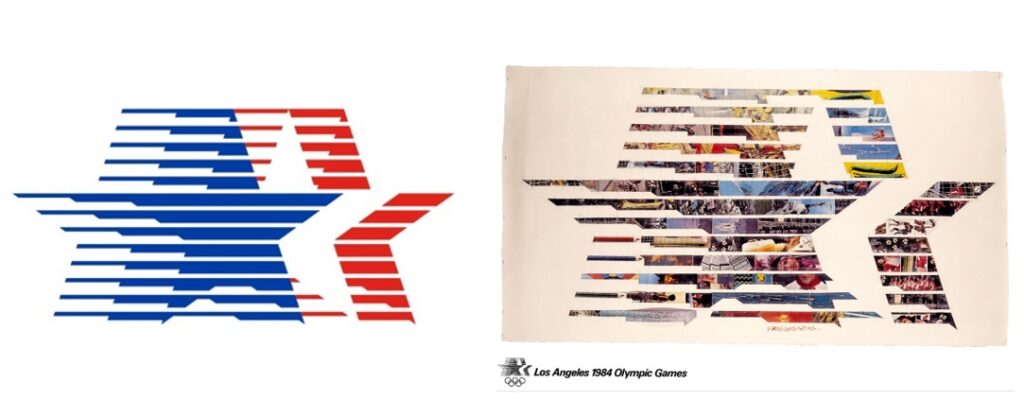
Left: Logo for the 1984 Los Angeles Olympics designed by Robert Miles Runyan Associates. The logo, called Stars in Motion, features three overlapping stars in red, white, and blue that represent first, second, and third place. The stars are linked in a dynamic gesture with increasing line thicknesses, and the logo also includes 13 horizontal lines based on the Star-Spangled Banner to convey speed and action.
Right: The 1984 official Olympics poster designed by Robert Rauschenberg. Rauschenberg used the emblem as the basis for his design and infused his signature style to capture the unique spirit of the times. © 2024 Robert Rauschenberg Foundation / Licensed by VAGA at Artists Rights Society (ARS), NY
Official Olympic posters like Rauschenberg’s serve as a visual symbol of each edition of the Games, becoming an iconic representation and a key part of the host country’s promotion plan. Being selected as the artist for the poster is a prestigious honor, as it grants the artist a unique platform to showcase their work on an international stage.
Arctic Aesthetics: Designing Posters for the Winter Games
While Summer Games posters frequently capture the vibrant energy and diverse activities of warm-weather sports, their Winter counterparts focus on the majestic landscapes and specialized events of colder climates.
A prime example of this distinct approach is seen in the work of LeRoy Neiman, whose influential and extensive involvement with the Olympics spanned from the early 1970s through the 1980s. As the Games’ official artist during this period, Neiman played a crucial role in shaping their visual identity. His posters for the 1980 Winter Games in Lake Placid vividly capture the dynamic essence of winter sports like speedskating and figure skating with his characteristic vibrant and energetic style.
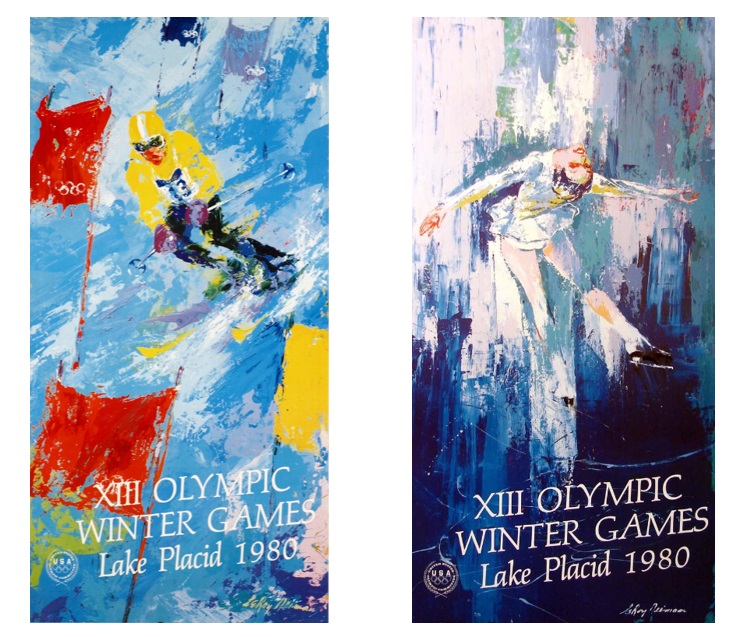
1980 Lake Placid Posters. LeRoy Neiman © 2024 LeRoy Neiman and Janet Byrne Neiman Foundation / Artists Rights Society (ARS), NY
The posters from the 1984 Sarajevo Winter Games offer more great examples of the diverse artistic approaches taken to represent the event. Gottfried Helnwein’s poster powerfully captures the emotional and physical intensity of an athlete participating in the skiing event. In contrast, Howard Hodgkin‘s poster adopts a more abstract approach, using bold colors and expressive brushstrokes to convey dynamic energy. Meanwhile, Jean-Michel Folon applies his signature whimsical and poetic style, with gentle lines and a soft color palette, to evoke a dreamlike sense of elegance and charm.
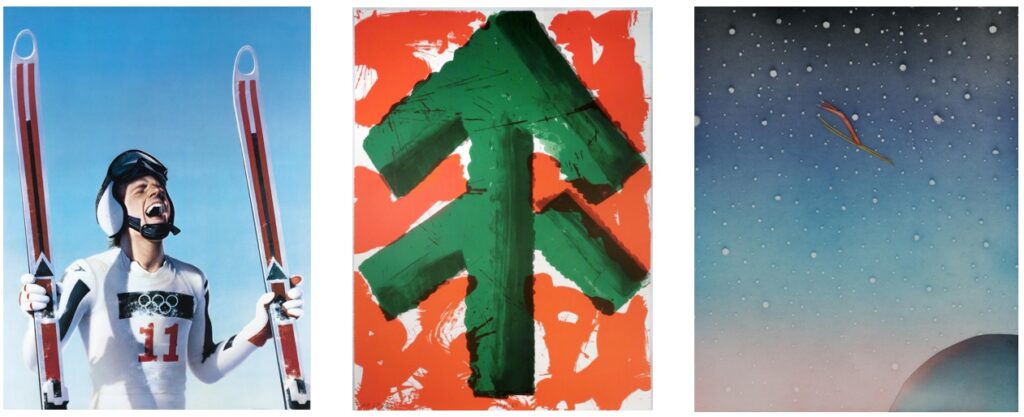
1984 Sarajevo Posters (Left to Right): Gottfried Helnwein © 2024 Artists Rights Society (ARS), New York / VG Bild Kunst, Bonn; Howard Hodgkin © 2024 Artists Rights Society (ARS), New York / DACS, London; Jean-Michel Folon © Fondation Folon / Artists Rights Society (ARS), New York 2024
Contemporary Olympic Posters: Fresh Perspectives on Tradition
Contemporary Olympic posters feature a range of artistic voices and innovative approaches, highlighting a trend towards more conceptual designs. Emma Amos‘ vibrant 1996 Atlanta poster breaks away from traditional sports imagery by infusing it with elements of African-American culture and her characteristic figurative style. For the 2012 London Olympics, Howard Hodgkin’s abstract Swimming composition uses sweeping blue brushstrokes to create a sense of depth and motion, suggesting a swimmer cutting through the water. Martin Creed’s design for the same year employs a minimalist approach with brightly colored horizontal stripes, each reflecting the colors of the Olympic rings and symbolizing the unity of the five continents. These posters illustrate a trend towards innovative, artist-driven designs that capture the Olympic spirit through unique lenses of culture, abstraction, and personal expression.
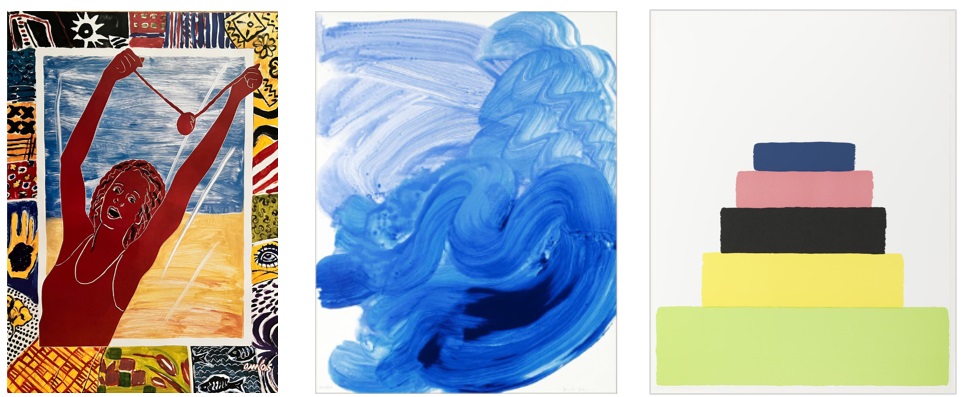
Left to Right: Emma Amos, Poster for the XXVI Olympic Games in Atlanta, 1996 © 2024 Emma Amos / Licensed by VAGA at Artists Rights Society (ARS), NY; Howard Hodgkin, Swimming, Poster for the XXX Olympic Games in London, 2012 © 2024 Artists Rights Society (ARS), New York / DACS, London; Martin Creed, Work No. 123, Poster for the XXX Olympic Games in London, 2012 © 2024 Artists Rights Society (ARS), New York / DACS, London
These posters exemplify a shift towards innovative, artist-driven designs that capture the Olympic spirit through diverse cultural perspectives, abstraction, and personal expression. Moreover, the evolution in artistic representation underscores the enduring role of art in shaping our experience of these global spectacles. From the groundbreaking designs of the 1972 Munich Games to the contemporary works of today, ARS artists have consistently demonstrated the powerful synergy between art and sport, creating visual legacies that extend far beyond the events themselves.
All of the designs featured in this post serve as fantastic examples of art in action. If you’re ready to infuse your brand with the same creative energy that has defined the Olympics for decades, we’re here to help. Contact us at info@arsny.com to explore how art licensing can help you achieve your vision and make your mark on the world stage.
To read more about the posters commissioned for the Olympics throughout the years, visit the Olympic World Library.
REQUEST TO LICENSE ARTWORK | JOIN OUR MAILING LIST TO LEARN MORE ABOUT LICENSING ARTWORK