
News + Blog
Artists’ Resale Royalties: ARS Founder Theodore Feder Responds to Bonhams Initiative
REQUEST TO LICENSE ARTWORK | JOIN OUR MAILING LIST TO LEARN MORE ABOUT LICENSING ARTWORK
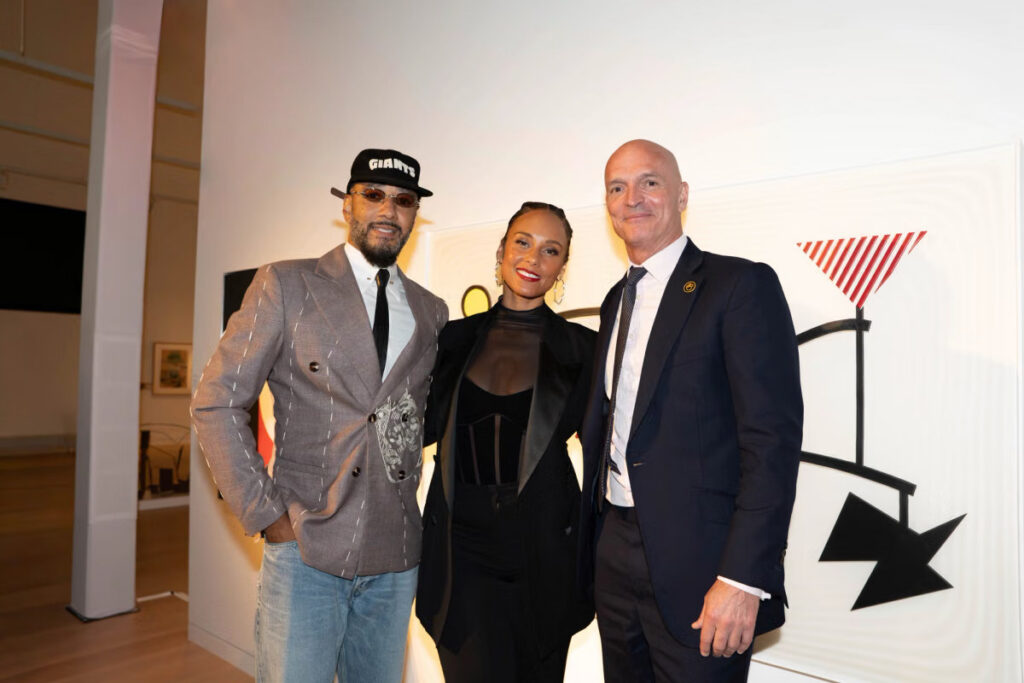
A new Bonhams initiative brings renewed attention to resale royalties for visual artists in the United States.
The conversation around artists’ resale royalties in the United States is gaining momentum. In a recent ARTnews article, Bonhams announced a new initiative, “The Deans’ Choice with Bonhams,” developed in collaboration with artists and collectors Kasseem “Swizz Beatz” Dean and Alicia Keys.
The program, launching with Bonhams’ 20th- and 21st-century art auctions in November 2026, will give consignors the voluntary option to direct a portion of the proceeds from the resale of eligible works by living artists to the artist. Bonhams will match the consignor’s elected percentage from its buyer’s premium.
The initiative is part of a larger discussion about the role of resale royalties in the art market and whether artists should continue to participate financially when their works are resold on the secondary market.
Theodore Feder on Artists’ Resale Royalties
Theodore Feder, Founder and President of Artists Rights Society, welcomed Bonhams’ initiative while emphasizing the importance of continuing to develop the model.
In a statement to ARTnews, Feder congratulated Bonhams for “taking a vital first step in inaugurating a system of artists’ resale royalties.”
He continued, “Bonhams’s initiative, however important as a first step and for which ARS is grateful, goes but part way into remedying this situation in the U.S. As proposed, the resale royalty only applies if the seller gives his or her consent thereto. It should apply to all eligible work and should not be restricted to the lifetime of the artist.”
Feder’s comments highlight an important distinction between a voluntary resale royalty program and a broader system in which eligible artists would have an established right to receive royalties from qualifying secondary-market sales.
The Growing Conversation Around Artist Resale Rights
In the United States, artists generally do not receive a continuing royalty when their original artworks are subsequently resold. The issue has therefore become an important topic in conversations about artists’ rights, the secondary art market, and the economic relationship between artists and the institutions and markets through which their work circulates.
As ARTnews reports, more than 80 countries have established some form of artists’ resale royalty, including countries throughout the European Union. In the U.S., legislation including the American Royalties Too (ART) Act has been introduced to establish a federal resale royalty for qualifying secondary-market transactions, although such legislation has not become federal law.
Bonhams’ new program represents one voluntary approach to the issue. The initiative was developed after Kasseem Dean and Alicia Keys became interested in creating a mechanism through which living artists could benefit from the later resale of their work. Their interest followed the 2018 sale of Kerry James Marshall’s Past Times, which sold at Sotheby’s for $21 million.
For ARS, the development is part of a continuing conversation about how the art market can recognize artists’ enduring relationship to their work.
Artists’ Rights in the Secondary Art Market
Artists’ resale royalties raise broader questions about how value is created and shared throughout an artwork’s lifetime. While an artist creates the original work, that work may subsequently pass through galleries, collectors, auction houses, and other parts of the secondary market, potentially increasing substantially in value.
The growing interest in resale royalty models reflects an effort to consider the artist’s continuing connection to that work and its economic value.
As voluntary initiatives such as Bonhams’ Deans’ Choice develop, they may also contribute to a broader discussion about the future of artist resale rights in the United States.
Artists Rights Society will continue to follow developments affecting the rights and economic interests of visual artists.
Read the full article in ARTnews!