News + Blog
Diego Rivera Artwork Licensing
Request to license artwork | Join our mailing list to learn more about licensing artwork
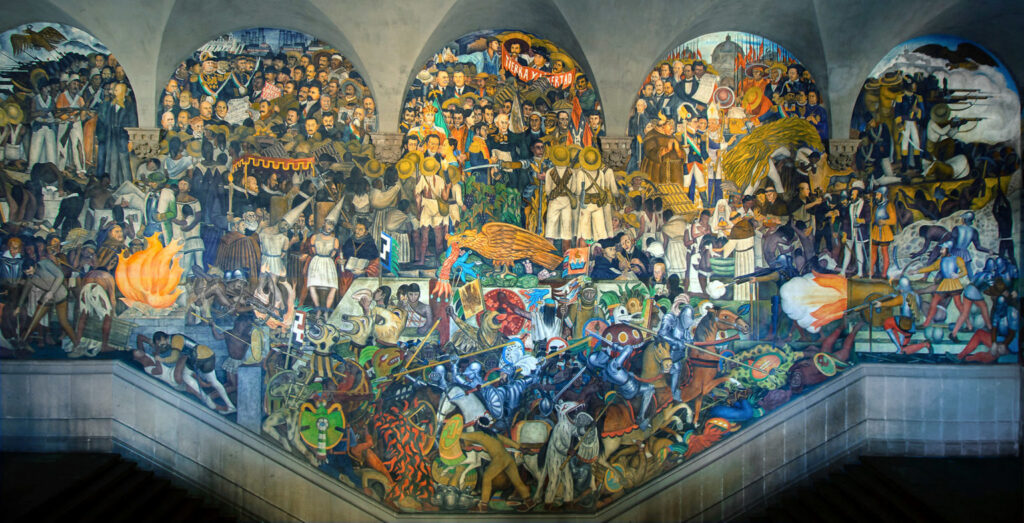
Diego Rivera, From the Conquest to 1930, from History of Mexico murals (1929–30) © 2026 Banco de México Diego Rivera Frida Kahlo Museums Trust, Mexico, CDMX / Artists Rights Society (ARS), New York
Few artists have left a mark on modern culture quite like Diego Rivera. Widely regarded as one of the most important figures in twentieth-century fine arts, Rivera’s powerful murals, paintings, and social commentary continue to resonate with audiences around the world. From Mexico City to San Francisco and throughout the United States, his artwork remains highly sought after for exhibitions, publications, merchandise, educational materials, and commercial collaborations.
As interest in art licensing continues to grow, many organizations, publishers, brands, museums, and media producers seek information about Diego Rivera licensing. Understanding how copyright, permissions, and artwork reproduction rights work is essential for anyone hoping to incorporate Rivera’s imagery into a project.
This guide explores Rivera’s artistic legacy, the ongoing demand for his work, and the considerations involved in licensing artwork by this celebrated Mexican artist.
Who Was Diego Rivera?
Diego Rivera was a renowned Mexican artist best known for his monumental murals that depicted the history, struggles, and achievements of working people. Born in Guanajuato, Mexico, in 1886, Rivera became one of the leading figures of the Mexican Mural Movement, a cultural initiative that sought to make art accessible to the public through large-scale public works.
After studying in Europe and engaging with modern artistic movements, Rivera returned to Mexico and developed the distinctive style that would define his career. His murals combined historical narratives, political themes, indigenous traditions, and social realism, creating works that continue to inspire artists and audiences today.
Rivera’s influence extended well beyond Mexico. Throughout his career, he worked extensively in the United States, producing major commissions that helped establish him as an internationally recognized figure in fine arts.

Portrait of Diego Rivera © 2026 Banco de México Diego Rivera Frida Kahlo Museums Trust, Mexico, CDMX / Artists Rights Society (ARS), New York
Diego Rivera’s Legacy in the United States
The impact of Diego Rivera on the United States art scene cannot be overstated. During the 1930s, Rivera received commissions from prominent institutions and patrons, bringing his unique vision to American audiences.
Among his most famous projects are the murals he created in San Francisco, where his work can still be viewed today. These murals helped introduce American audiences to Rivera’s socially engaged artistic practice and remain important cultural landmarks.
Rivera also worked in Detroit and New York, creating ambitious mural cycles that explored industry, labor, and technological progress. His ability to transform public spaces through art cemented his reputation as one of the most significant muralists of the twentieth century.
Today, interest in Diego Rivera licensing often stems from the enduring popularity of these works and the continued relevance of their themes.
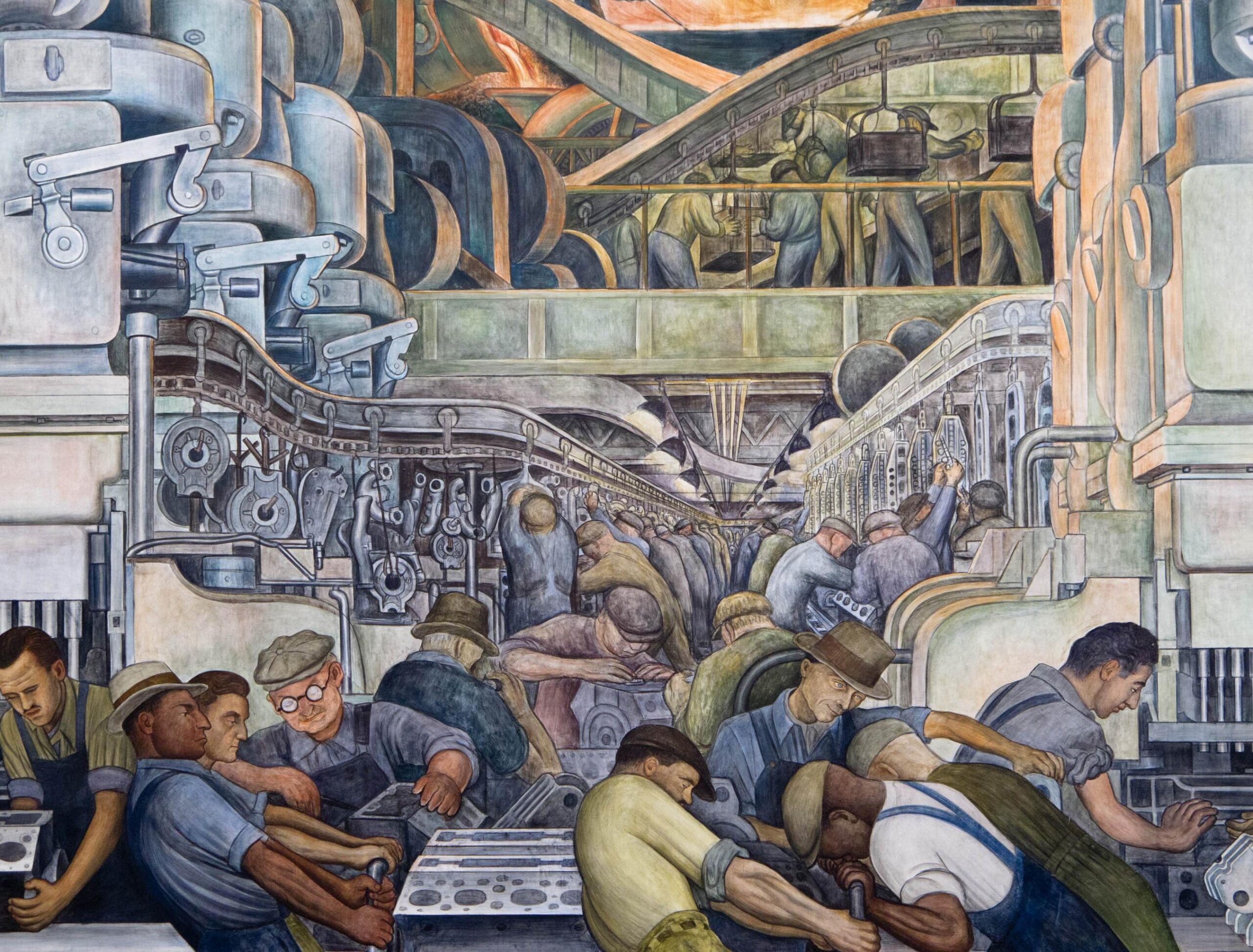
Diego Rivera, North wall (detail), Detroit Industry murals (1932-33) © 2026 Banco de México Diego Rivera Frida Kahlo Museums Trust, Mexico, CDMX / Artists Rights Society (ARS), New York
Diego Rivera and Frida Kahlo
Any discussion of Diego Rivera would be incomplete without mentioning Frida Kahlo. The relationship between Rivera and Kahlo remains one of the most famous artistic partnerships in history.
While Kahlo developed her own distinctive artistic voice, the two artists profoundly influenced one another throughout their lives. Together, they became central figures in the cultural identity of modern Mexico.
The global popularity of Frida Kahlo has also contributed to renewed interest in Rivera’s work. Museums, publishers, filmmakers, and educational organizations frequently explore the artistic and personal connections between the two artists, creating ongoing demand for licensed images related to both figures.
As a result, Diego Rivera licensing inquiries often arise alongside projects involving Frida Kahlo and the broader history of Mexican modernism.s, Thomas expressed a profound connection to the natural world, using abstraction to explore universal themes of beauty and spirituality.
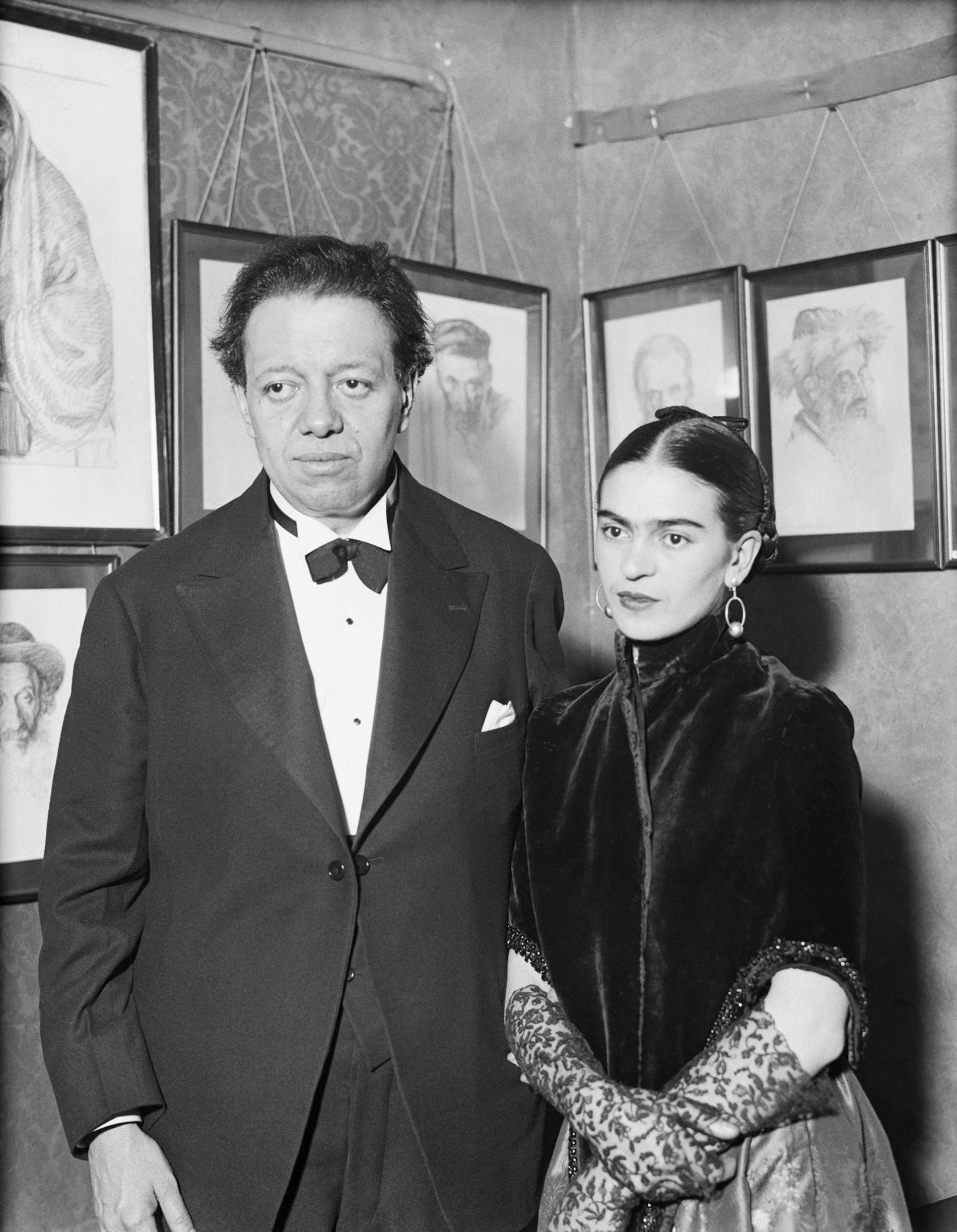
Diego Rivera and Frida Kahlo © 2026 Banco de México Diego Rivera Frida Kahlo Museums Trust, Mexico, CDMX / Artists Rights Society (ARS), New York
Museums and Institutional Interest
Rivera’s artwork is represented in major museum collections around the world. Institutions continue to exhibit, study, and publish scholarship on his work, ensuring that new generations remain familiar with his artistic achievements.
The Museum of Modern Art has played an important role in presenting Rivera’s work to international audiences. In addition, numerous museums throughout Mexico, Europe, and the United States maintain important holdings of his paintings, drawings, and related materials.
Museum exhibitions frequently require image licensing for catalogues, educational resources, promotional materials, websites, and exhibition merchandise. Because Rivera’s work occupies such an important place in art history, requests for reproduction rights remain common among cultural institutions.
Organizations pursuing Diego Rivera licensing should understand that permissions may be required depending on the intended use and the specific artwork involved.

The Marriage of the Artistic Expression of the North and of the South on This Continent, commonly known as Pan American Unity (1940) © 2026 Banco de México Diego Rivera Frida Kahlo Museums Trust, Mexico, CDMX / Artists Rights Society (ARS), New York
Why Diego Rivera’s Artwork Remains Popular for Licensing
Several factors contribute to the ongoing demand for Diego Rivera licensing.
First, Rivera’s imagery is instantly recognizable. His bold compositions, monumental figures, and vivid storytelling make his work visually compelling across a wide range of formats.
Second, Rivera’s themes continue to resonate with contemporary audiences. His exploration of labor, identity, community, and social justice remains relevant today.
Third, Rivera’s role as a leading Mexican artist gives his work enduring cultural significance. Brands, publishers, educators, and institutions often seek authentic artistic voices that reflect diverse histories and perspectives.
Finally, Rivera’s influence on public art is unmatched. His ability to paint murals that communicate complex ideas on a monumental scale continues to inspire artists and organizations around the world.
These qualities make Rivera’s work attractive for educational publishing, museum programming, documentaries, editorial projects, and carefully considered commercial collaborations.

Dream of a Sunday Afternoon in Alameda Park (1947) © 2026 Banco de México Diego Rivera Frida Kahlo Museums Trust, Mexico, CDMX / Artists Rights Society (ARS), New York
Common Uses for Diego Rivera Licensing
Organizations may seek Diego Rivera licensing for a variety of purposes, including:
-
- Books and academic publications
-
- Museum exhibitions and catalogues
-
- Documentary films
-
- Television productions
-
- Editorial articles
-
- Educational materials
-
- Digital content
-
- Exhibition marketing
-
- Licensed merchandise
-
- Public programming and cultural initiatives
Each proposed use typically requires a review process to determine the scope of rights needed and any applicable permissions.
Understanding Art Licensing and Copyright
Art licensing allows individuals and organizations to reproduce artwork legally while respecting the rights associated with the work. Depending on the project, licenses may cover print, digital, promotional, editorial, educational, or commercial uses.
For historically significant artists such as Diego Rivera, licensing helps ensure that reproductions maintain appropriate standards while supporting the preservation and stewardship of artistic legacies.
Whether an organization is developing a museum exhibition, producing a documentary, or creating educational resources, obtaining proper permissions is an essential part of responsible artwork use.
Working with experienced licensing professionals can help simplify this process and ensure that projects move forward efficiently.
The Enduring Importance of Diego Rivera
More than half a century after his death, Diego Rivera remains one of the most influential figures in global fine arts. His murals continue to attract visitors in Mexico City, San Francisco, Detroit, and beyond. His paintings remain staples of museum exhibitions, scholarly research, and public discourse.
As a Mexican artist whose work bridged cultures and continents, Rivera helped redefine the role of art in society. His commitment to public engagement, social commentary, and artistic excellence continues to inspire audiences throughout the world.
For publishers, museums, educators, brands, and cultural organizations interested in Diego Rivera licensing, his work offers a powerful connection to one of the most important artistic voices of the twentieth century. Whether featured in an exhibition catalogue, educational publication, documentary film, or cultural initiative, Rivera’s artwork remains as relevant and impactful today as it was during his lifetime.
Request to license artwork | Join our mailing list to learn more about licensing artwork